Source
Begin from synthetic geometry today. Later, accept permitted scanner or topography exports through a neutral import schema.
 Foveo Labs
Specialty lens workflow software
Foveo Labs
Specialty lens workflow software
End-to-End Workflow
Foveo Labs is designed to make complex specialty lens work feel less fragmented: scanner-neutral geometry, digital eye files, design artifacts, lab review packets, status history, tracking references, and replayable follow-up records in one workflow.
The Loop
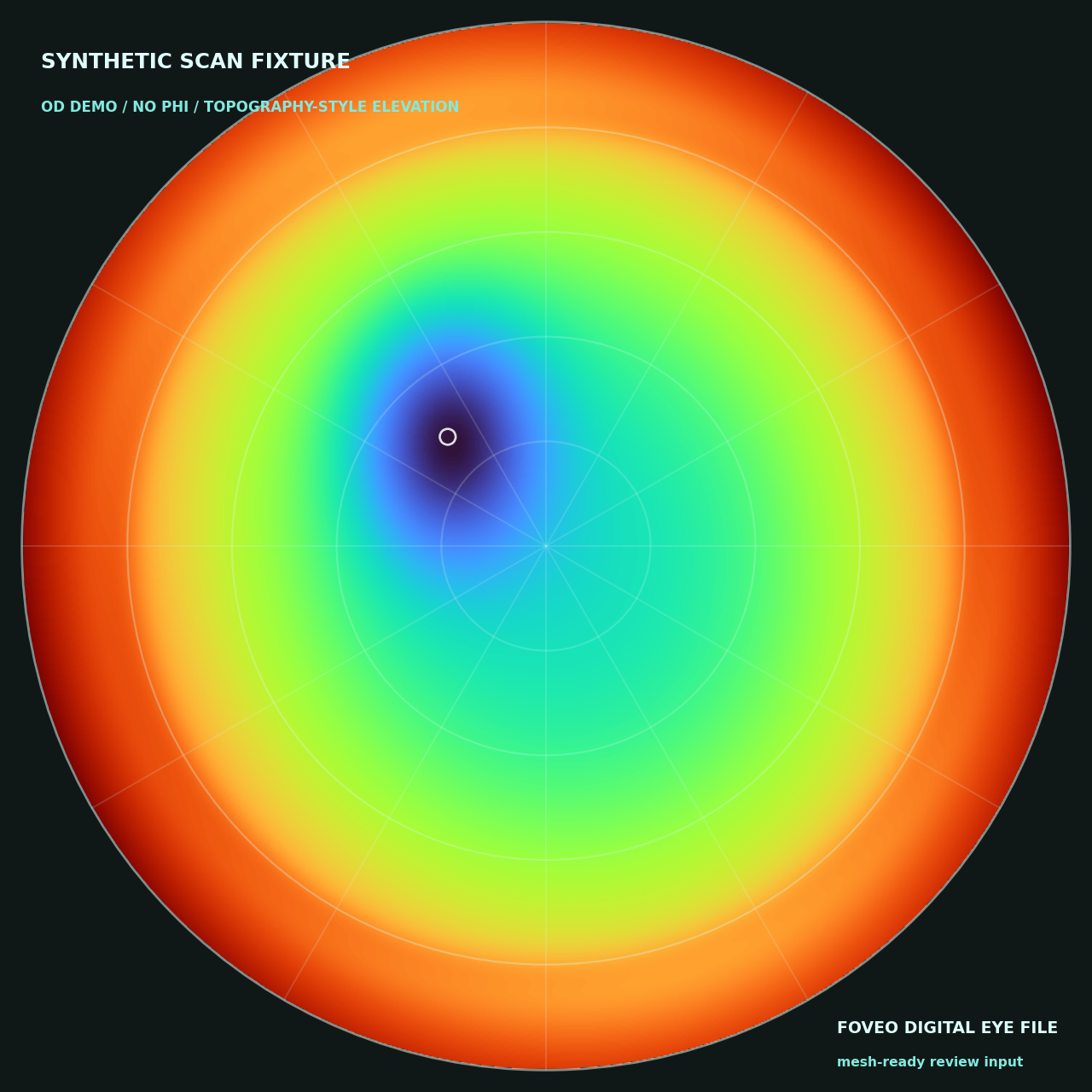
Begin from synthetic geometry today. Later, accept permitted scanner or topography exports through a neutral import schema.
Check units, completeness, surface coverage, file identity, notes, and warnings before a packet can move forward.
Generate the digital eye file, design spec, clearance metrics, cross-section, STL preview, and replay hash.
Let clinic and lab teams review the same artifact set instead of separate screenshots, emails, notes, and files.
Attach status, lab questions, requested revisions, shipment references, and pickup or reorder notes to the case.
Regenerate or compare artifacts from the versioned eye file so follow-up conversations stay tied to known records.
Handoff Map
| Stage | Who | Foveo artifact | Status |
|---|---|---|---|
| Clinic case setup | Doctor, fitter, technician, or clinic operations | Case reference, notes, scan-source type, consent and upload readiness flags | Future private workflow behind authentication |
| Geometry import | Technician or approved software integration | Neutral scan schema, unit validation, completeness warnings, file hash | Synthetic-only in the public demo |
| Design review | Clinic and lab reviewer | Digital eye file, design spec, cross-section, STL preview, warning records | Working demo with synthetic artifacts |
| Lab packet | Fabrication lab, university lab, or technical partner | Export packet with manifest, artifact hashes, STL, images, and review questions | Non-confidential review only until a collaboration path exists |
| Status and return loop | Lab, clinic, and patient-care team | Status, revision requests, lab notes, tracking reference, reorder trigger | Product direction, not public patient workflow today |
Who Sees What
See the case reference, synthetic artifact preview, clearance behavior, warning history, and lab packet state in one place.
Receive a structured packet with file names, hashes, design spec, cross-section, STL preview, and open review questions.
Review what Foveo can produce from synthetic fixtures and tell us what file, validation, and documentation requirements are missing.
Competitor and Scanner Systems
The practical path is not to scrape private apps or pull unauthorized APIs. The practical path is scanner-neutral import and export: support clinic-owned files, public documented formats, explicit partner APIs, and Foveo packets that a human or lab system can read.
User-provided exports, public documentation, formal partner APIs, neutral JSON manifests, STL previews, PDFs, and lab packets.
No private API scraping, no reverse-engineered workflows, no proprietary fitting algorithm cloning, and no patented method implementation.
Be the durable record and packet layer between systems, even when capture, design review, fabrication, and follow-up happen in different places.
FAQ
No. The strongest first product is a scanner-neutral workflow and review layer. A future mobile app should begin as a secure viewer, packet reviewer, and status tool, not a clinical scanner.
That is the target architecture. Foveo should accept permitted exports or formal integrations and normalize them into one internal scan schema after legal, privacy, and technical review.
We can build around publicly documented exports and user-owned files. We should not claim formal integrations, scrape private tools, or reverse-engineer proprietary apps without permission.
A non-confidential synthetic review packet: source assumptions, design spec, STL preview, cross-section, warning record, hashes, and focused questions about lab requirements. It is not a request to print a wearable lens.
Supabase fits the private console, not the public marketing site: authenticated cases, role-based access, file metadata, notes, lab status, audit history, and tracking references after privacy controls and legal requirements are ready.
Yes, as a product direction. For real clinic data, that requires authenticated access, clear permissions, privacy review, data-retention policy, and agreements before any patient data enters the system.
That should be part of the future private workflow: lab status, tracking reference, revision request, hold reason, shipped state, received state, and reorder reference tied to the eye file.
No. The public product demonstrates synthetic software workflow only. It does not diagnose, fit, dispense, manufacture, approve, or release wearable lenses.
Legal and Safety Boundary
This site is informational and non-clinical. It does not provide medical advice, prescription decisions, regulatory clearance, manufacturing approval, privacy compliance certification, legal advice, or freedom-to-operate conclusions. Before accepting real patient data, scanner exports, or production workflows, Foveo would need appropriate professional review, privacy controls, contracts, and regulatory strategy.
Public Sources
University of Waterloo has publicly described patient-specific printed hard contact lens research.
WatCo is Waterloo's commercialization office and describes licensing and industry collaboration services.
Eaglet Eye and WAVE publicly describe data transfer or topography import concepts.
FDA digital health guidance is one reason Foveo keeps public claims non-clinical today.